Coach or Train in the UK? A Cost and Comfort Comparison
There is a moment in every trip plan when you type the same two towns into two different booking sites and watch the numbers diverge. One option gets you there in a couple of hours for a serious sum. The other takes most of the day and costs about as much as lunch. Neither is automatically the right answer.
The decision really comes down to four things: what you pay, how long you sit still, what you can carry, and how likely it is that something goes wrong. Work through those and the choice usually makes itself.
The money question, honestly
Coaches are almost always cheaper, and often dramatically so. That holds truest when you book late: a walk-up rail fare bought on the day can cost many times a seat on the same corridor by road. Book a train ticket weeks ahead, though, and the gap narrows to the point where it can disappear entirely.
What shifts the numbers in your favour on rail:
- Advance singles. Fixed to a specific train, no flexibility, and where most rail value lives.
- Off-Peak and Super Off-Peak fares. Travel at quieter times without committing to one departure.
- A railcard. Most take roughly a third off, which is worth checking against how many trips you'll make this year. Some carry minimum-fare conditions at peak times, so read the terms.
- Split ticketing. Buying two or more tickets for one journey and staying on the same train can cut costs on certain routes. It's legitimate, but keep the train you booked and know the conditions.
On the coach side, promotional fares appear on quiet departures and sell out quickly. Treat the standard fare as your realistic figure, and watch for booking or card fees at checkout. Seat reservations, where they exist on trains, are usually free.
Door to door, not station to station
Trains win on speed over distance. On routes such as London to Manchester or London to Edinburgh, rail can take half the time of the coach or less. That is a serious block of hours back in your day.
But compare like with like. Add the trip to the station at each end — some coach services stop at motorway services, with a connecting shuttle or taxi to finish the job. Add the time to find your platform or bay, board and settle. Add a buffer if you're travelling on a Friday evening or a bank holiday weekend, when the roads can undo the timetable entirely.
On short hops of an hour or two, the coach is often genuinely competitive once you factor in changes and waiting around.
Comfort, seat by seat
On the train
Long-distance trains generally give you more legroom, tables on many services, power at most seats, toilets, and the freedom to walk to a trolley or buffet. Wifi is advertised widely and delivers patchily, especially through cuttings and tunnels. The real drawback is crowding: turn up on a busy commuter service and you may be standing for an hour.
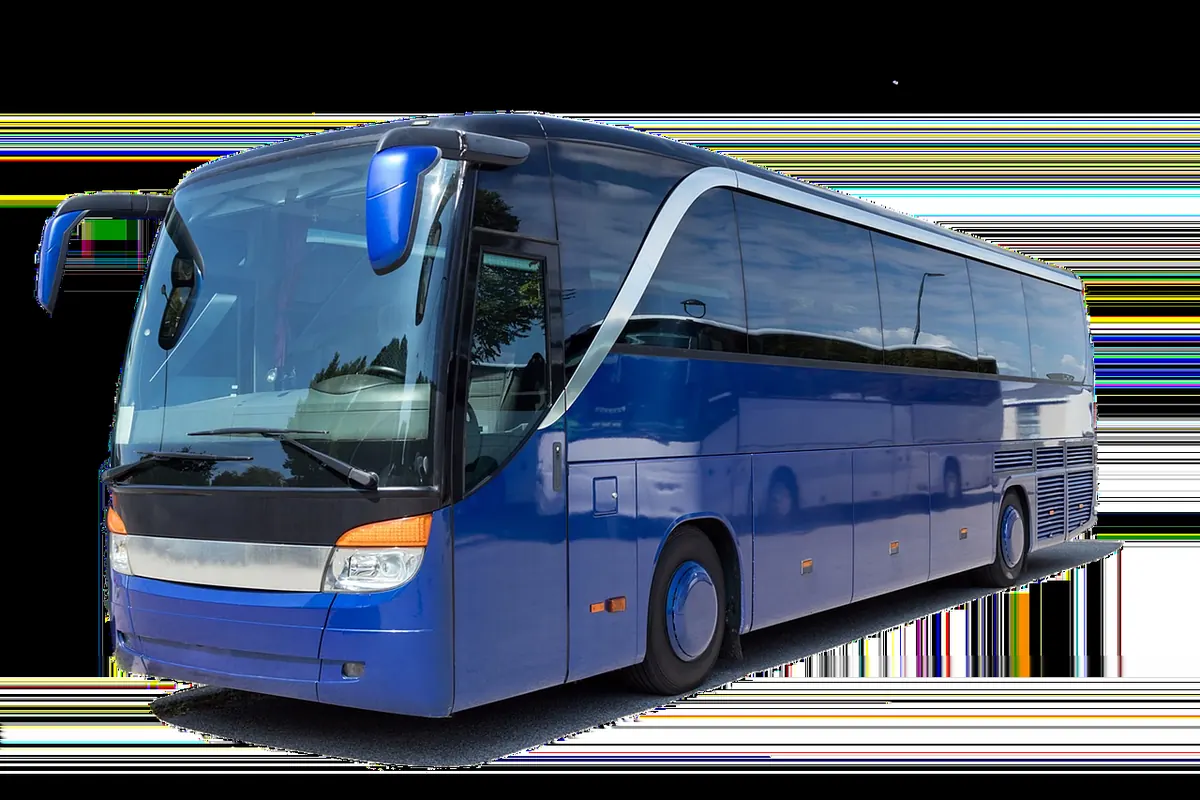
On the coach
Modern coaches have reclining seats, seatbelts and, increasingly, power sockets and wifi, though not every vehicle on every route. Legroom is tighter. Long journeys usually include a stop at a motorway services, typically fifteen to twenty minutes — enough for a coffee and a stretch, not a proper meal.
If you're prone to travel sickness, a coach on a winding A-road is a harder day than a train on the same route. Sitting near the front helps, and boarding early gives you the pick of the seats.
Luggage: what you can actually bring
This is where coaches quietly beat trains for some travellers.
- Coaches: usually one or two cases in the hold plus a small bag with you. No airline-style weight limit, but you load and unload your own bags, and anything unreasonable can be refused.
- Trains: no formal limit on most operators and no check-in, but you carry everything yourself. Rack space is first-come, first-served, and a full peak service is not the place to discover your case doesn't fit.
- Bikes: many long-distance trains need a reservation and space is limited. Coaches rarely take full-size bikes, though folding ones may be allowed.
- Wheelchairs and mobility aids: book train assistance in advance — ideally a day ahead. Coach operators can carry wheelchairs, but space is usually limited to one per vehicle and must be reserved.
Delays, cancellations and strikes
Road and rail fail in different ways. Coaches are at the mercy of traffic: roadworks, accidents, holiday congestion. Off-peak on a Tuesday, a motorway run is usually predictable. On the Friday before a bank holiday, it isn't. Driver shortages have also caused last-minute cancellations.
Trains face signal failures, engineering works, severe weather and industrial action. Weekend engineering work frequently means a rail replacement bus, which is — with some irony — a coach.
Two practical points. Many train operators run Delay Repay schemes that pay compensation once a delay passes a threshold; the details vary, so check the specific operator before you travel. Coach operators have their own policies, generally less generous but often including a place on the next available service. And if a rail strike is announced, coaches fill up within hours: book immediately, or travel the day before if you can.
Making the call for your route
- Price the train for your actual dates, using Advance fares and any railcard you hold.
- Price the coach for the same day, and check exactly where it stops.
- Compare total journey times door to door, including the trip to and from each station.
- Put a value on the hours saved. If the train saves four hours for a modest premium, plenty of people take it.
- Check luggage and accessibility requirements against what you're carrying.
- Book the flexible option if your plans might change. Flexibility is expensive on rail and cheap on coaches.
If you're still torn, a mixed itinerary often wins: coach one way and train the other, or coach for the long leg and train for the short connection into town.
Before you book: a short checklist
- Buy train Advance tickets as soon as they're released, often around three months before travel.
- Travel mid-morning or mid-afternoon, Tuesday to Thursday, for the cheapest and quietest seats on either mode.
- Avoid the last coach or last train of the day if a missed connection would leave you stranded.
- Screenshot your ticket and carry a charged battery pack.
- Read the operator's delay and refund policy before you pay.
Then go. Both options will get you there. The right one is simply the one that fits your budget, your patience and your luggage.
Photo: Freedommail / Pixabay